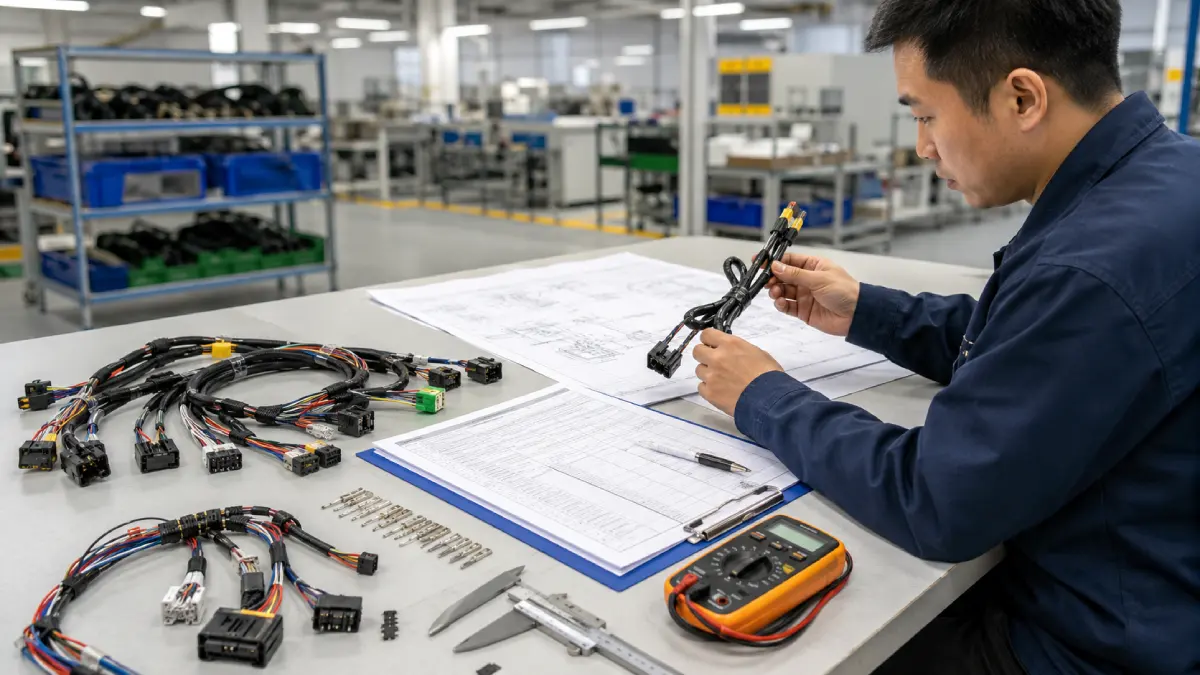
Why a Complete Wire Harness RFQ Improves Quotation Accuracy
A wire harness quotation depends on many variables. Wire material, conductor size, connector brand, terminal plating, protective sleeve, labor difficulty, test scope, packaging, MOQ, and compliance documents all affect cost. If these details are missing, different suppliers may quote different assumptions. One supplier may use original connectors, another may use local alternatives. One may include 100% continuity testing, while another may only include visual inspection. One may quote individual packaging, while another may quote bulk packaging. The price comparison then becomes meaningless.
A complete cable assembly RFQ helps factories understand the real production scope. It also helps you identify which suppliers are professional. A capable factory will review your files, ask technical questions, point out missing information, and explain quotation conditions. A weak supplier may give a price without checking anything. That is not confidence. That is a small red flag waving politely.
Micro Summary: RFQ Quality Determines Quote Quality
A high-quality RFQ package should reduce guesswork. It should tell the supplier what the harness does, where it will be used, what materials are required, how it should be tested, how it should be packed, and how many pieces you plan to order. The better the input, the more useful the quotation.
| RFQ Quality | Supplier Response | Buyer Outcome |
|---|---|---|
| Photo only | Supplier guesses dimensions, wire type, connector model, and test scope. | Fast but unreliable quote with high sample revision risk. |
| Drawing without BOM | The supplier can understand the structure but must confirm materials and component brands. | Moderate quote accuracy but possible component substitution risk. |
| Drawing plus BOM | The supplier can quote materials, labor, testing, and lead time more accurately. | Better quote comparison and faster sample preparation. |
| Complete RFQ package | Supplier can review manufacturability, compliance, testing, packaging, and production feasibility. | Accurate quotation, fewer revisions, clearer supplier evaluation. |
The Essential Wire Harness RFQ Checklist
A practical wiring harness inquiry checklist should be easy for purchasing teams to use and detailed enough for engineering teams to trust. You do not need to write a novel in the first email, but you should include enough technical and commercial information for the factory to quote the same product you actually need.
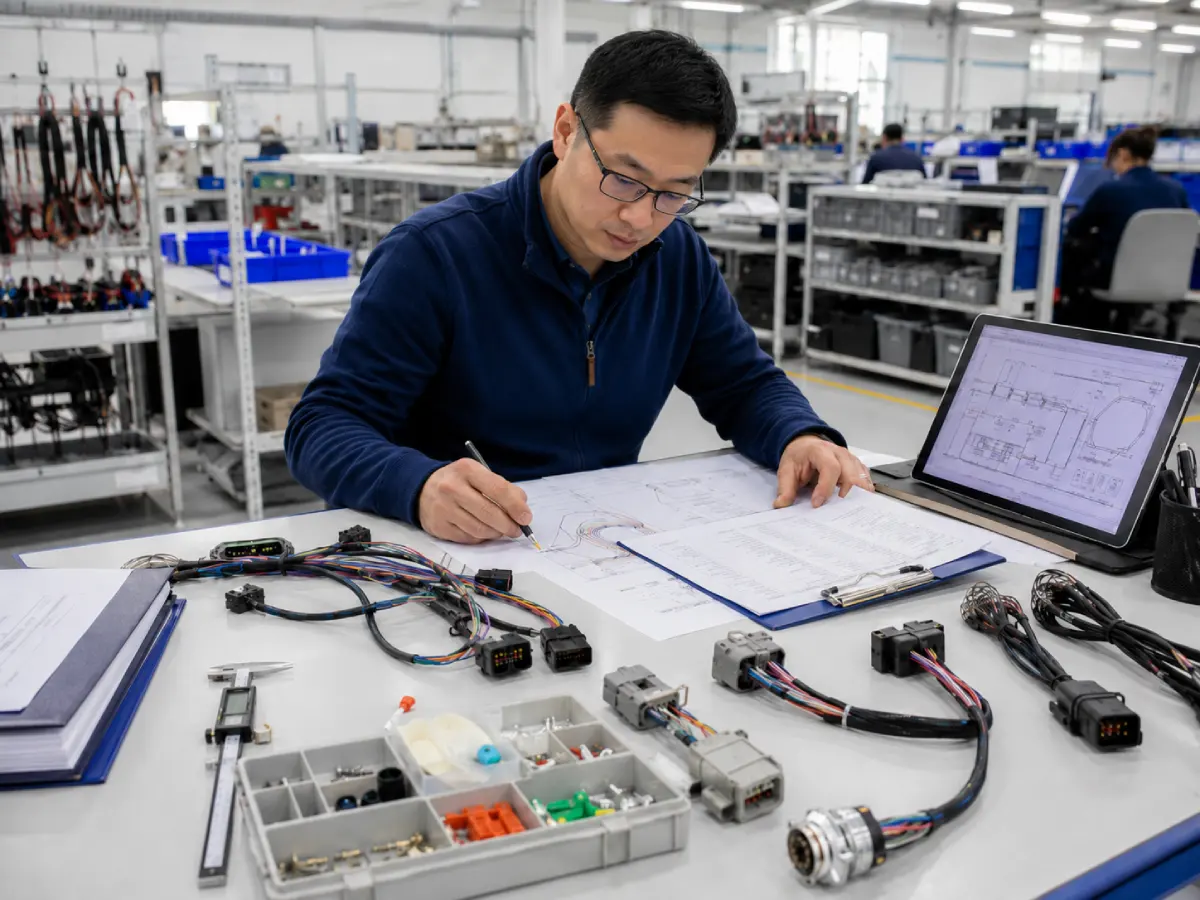
Core RFQ Items to Send to a Factory
| RFQ Item | What to Include | Why It Matters |
|---|---|---|
| Drawing or wiring diagram | 2D drawing, 3D file, schematic, pinout table, branch layout, or sample photo. | Defines harness structure, length, connector positions, and circuit routing. |
| BOM | Wire, connector, terminal, sleeve, tube, label, seal, clip, tie, and accessory list. | Helps suppliers quote real material cost instead of guessing components. |
| Wire specification | AWG or mm², conductor material, insulation, voltage, current, color, temperature rating. | Prevents overheating risk, voltage drop, wrong flexibility, and material mismatch. |
| Connector details | Brand, part number, terminal model, mating connector, seal, lock, approved alternatives. | Avoids connector mismatch, substitution risk, and assembly failure. |
| Testing requirement | Continuity, pinout, short circuit, pull force, insulation resistance, Hi-Pot, visual inspection. | Clarifies inspection cost and quality evidence before shipment. |
| Packaging | Individual bag, carton quantity, label, coil diameter, connector protection, pallet requirement. | Prevents shipping damage, mixed part numbers, and warehouse confusion. |
Send Drawings, Samples, or Clear Visual References
The first thing a factory needs is a clear product definition. A wire harness RFQ should ideally include a technical drawing or wiring diagram. If you do not have a formal drawing yet, send a physical sample, high-resolution photos, a hand-marked layout, and a description of the application. A professional custom harness quote can start from incomplete information, but it should not move to mass production without controlled specifications.
Best Drawing Formats for Wire Harness Quotations
- 2D harness drawing showing total length, branch length, connector position, and label position.
- Wiring schematic showing circuit connections and pinout.
- Connector view showing cavity number and wire color.
- 3D routing file for complex equipment, vehicles, machinery, or compact devices.
- Mark sample photos when a formal drawing is not available.
- Revision-controlled PDF or CAD file for approved OEM projects.
A drawing should define measuring points clearly. For example, does length mean connector face to connector face, wire exit point to wire exit point, or centerline routing length? This detail matters because different measuring methods create different harness lengths. For a simple loose harness, a few millimeters may not matter. For a vehicle, control cabinet, battery pack, robot, medical machine, or compact electronic device, length errors can cause installation stress, connector pull, or assembly delay.
Include a Complete BOM for Accurate Material Costing
The BOM is the backbone of a cable assembly RFQ. Without a BOM, the supplier must decide which wire, connector, terminal, sleeve, heat shrink, label, tape, grommet, clip, and packaging material to use. This can create huge differences in price and quality. A quote using original branded connectors cannot be compared fairly with a quote using unapproved alternatives.
What a Wire Harness BOM Should Include
- Wire type, gauge, color, insulation material, temperature rating, and voltage rating.
- Connector brand, series, part number, color, cavity count, and mating connector information.
- Terminal part number, plating, wire range, and crimp requirement.
- Seals, wedges, locks, backshells, boots, grommets, clips, cable ties, and strain relief parts.
- Protective sleeve, corrugated tube, braided sleeve, tape, heat shrink tube, or spiral wrap.
- Labels, markers, barcodes, serial number tags, and carton labels.
- Allowed substitutes and no-substitution items.
For OEM projects, the BOM should also state whether equivalent components are allowed. Some buyers require original brands for automotive, medical, energy storage, appliance, marine, or certified products. Others allow approved alternatives after sample validation. Both approaches can work, but they must be written clearly. If the RFQ says nothing, the supplier may choose based on cost. That is good for the quote line, not always good for the product.
| BOM Condition | Quotation Impact | Buyer Risk |
|---|---|---|
| No BOM | Supplier estimates material based on appearance or experience. | Different suppliers quote different products. |
| Partial BOM | Major components are quoted, but accessories and protection may remain unclear. | Hidden cost, sample deviation, missing details. |
| Complete BOM | The supplier can calculate material cost, sourcing lead time, and substitution rules accurately. | Lowest comparison risk and strongest purchasing control. |
Define Wire Gauge, Current Load, and Electrical Requirements
Wire gauge affects safety, heat, voltage drop, flexibility, weight, cost, and connector compatibility. A wire harness quotation cannot be accurate if the conductor size is missing. You should send AWG or mm², conductor material, voltage, current, temperature rating, and expected operating environment.
If the harness carries power, motor current, battery current, charging current, heating load, or high-current control signals, conductor selection should be reviewed carefully. If the harness carries signals or data, the RFQ should also confirm shielding, twisted-pair requirements, impedance needs, grounding method, and EMI concerns.
Electrical Details to Include in the RFQ
- AWG or metric conductor cross-section.
- Maximum current per circuit.
- Operating voltage and peak voltage, if applicable.
- Allowed voltage drop for long harnesses.
- Conductor material, such as bare copper or tinned copper.
- Insulation material and temperature rating.
- Shielding, twisted pair, drain wire, or grounding requirement.
- Relevant standards or customer-specific requirements.
For regulated electrical and electronic products, material and safety requirements may also apply. RoHS and REACH can affect insulation, sleeves, labels, adhesives, connector plastics, and coatings. UL-recognized wire may be required for certain appliance wiring or electronic equipment applications. If your finished product enters regulated markets, include the compliance requirement in the RFQ instead of asking for it after production. Compliance paperwork is not seasoning. You cannot sprinkle it on at the end.
Specify Connectors, Terminals, Pinout, and Approved Alternatives
Connectors and terminals are often the most expensive and risk-sensitive parts of a custom harness quote. A connector that looks similar may not have the same locking design, terminal retention, sealing performance, mating compatibility, temperature rating, or current rating. That is why the RFQ should include exact connector and terminal information wherever possible.
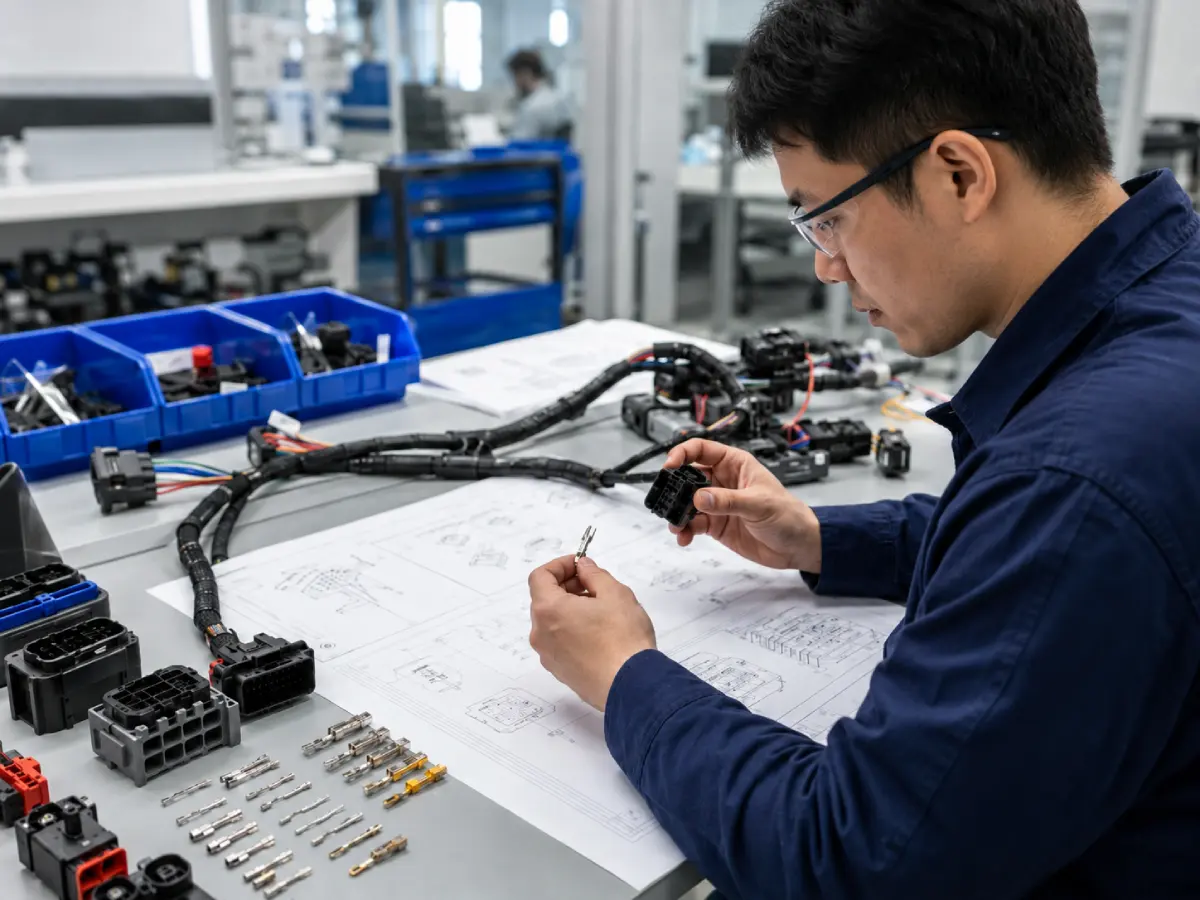
Connector and Terminal Details to Send
- Connector brand, series, and complete part number.
- Terminal part number and compatible wire gauge range.
- Seal, plug, wedge, lock, backshell, or cover part number.
- Mating connector information.
- Connector orientation and cavity numbering.
- Pinout table with wire color and circuit name.
- Waterproof or IP rating requirement.
- Approved alternative brands or a written no-substitution rule.
A reliable custom cable assembly supplier should check connector availability before quoting. Some connector models have long lead times, MOQ restrictions, regional availability issues, or counterfeit risk. If the supplier proposes an alternative, ask for datasheets, photos, sample approval, and testing before accepting it for OEM production.
| Connector Information | Should You Include It? | Reason |
|---|---|---|
| Brand and part number | Yes, whenever available. | Controls cost, compatibility, lead time, and quality level. |
| Mating connector | Strongly recommended. | Prevents fit problems during final assembly. |
| Pinout table | Required for multi-circuit harnesses. | Prevents wrong circuit connection and testing confusion. |
| Approved alternatives | Recommended for cost-sensitive projects. | Improves sourcing flexibility while keeping buyer control. |
Explain the Application Environment
A wire harness RFQ should explain where the harness will be used. The same harness drawing may need different materials depending on the environment. Indoor appliances, outdoor lighting, agricultural machinery, electric vehicles, battery systems, medical equipment, industrial robots, marine devices, and control cabinets all have different risks.
Application Details That Affect the Quote
- Indoor or outdoor use.
- Temperature range and heat source exposure.
- Moisture, splash, oil, fuel, chemical, UV, salt spray, or dust exposure.
- Vibration, repeated bending, or moving installation.
- Space limitation, routing path, and bend radius.
- Flame resistance or low-smoke requirement.
- Expected service life or warranty requirement.
- Installation process and technician access.
This information helps the factory recommend insulation, protective sleeving, sealing, strain relief, cable ties, clips, grommets, and packaging. Without application details, the supplier may choose a generic material that looks fine in a sample but performs poorly in the field.
Confirm Testing Standards and Inspection Records in the RFQ
Testing scope directly affects cost and quality confidence. A cable assembly RFQ should state which tests are required and whether the supplier must provide test records. For simple products, continuity testing and visual inspection may be sufficient. For complex OEM projects, additional tests may be required.
Common Test Requirements to Include
- 100% continuity test.
- Pinout verification.
- Short-circuit test.
- Crimp pull-force test.
- Crimp height inspection.
- Insulation resistance test.
- Hi-Pot test for specific high-voltage applications.
- Waterproof or sealing test where required.
- Visual inspection based on defined workmanship criteria.
- Final inspection report or shipment QC record.
IPC/WHMA-A-620 is widely used as an industry reference for cable and wire harness acceptance. For automotive-related projects, buyers may also require PPAP, control plans, process flow charts, FMEA, IMDS data, traceability, and IATF 16949-related quality discipline. For general industrial or appliance projects, ISO 9001, UL material data, RoHS declarations, and REACH information may be more relevant.
| Project Type | RFQ Test Requirement | Recommended Record |
|---|---|---|
| Simple internal wiring | Continuity test and visual inspection. | Final inspection checklist. |
| Industrial control harness | Continuity, pinout, label check, and crimp validation. | Continuity report, pull-force record, QC photos. |
| Automotive or EV harness | Continuity, pinout, pull force, fixture inspection, traceability. | PPAP-related documents, control plan, batch traceability. |
| High-voltage or safety-related harness | Insulation resistance, Hi-Pot, locking check, special handling review. | Electrical test report and special inspection record. |
State Labeling, Traceability, and Revision Requirements
Labeling and traceability are small details with large consequences. Labels help production workers install harnesses correctly. They help maintenance teams identify circuits. They help quality teams trace batch problems. For a wiring harness inquiry checklist, label requirements should be included before quote approval.
Labeling Details to Include
- Part number and revision level.
- Customer code or internal project number.
- Batch number, lot number, or serial number.
- Barcode or QR code requirement.
- Label position and orientation.
- Label material, such as wrap-around label, heat-shrink marker, or adhesive label.
- Resistance to heat, oil, moisture, cleaning chemicals, or abrasion.
- Carton label and pallet label information.
Revision control is especially important for OEM projects. If a drawing changes, the supplier must know which revision to quote, sample, and produce. Your RFQ should state the drawing revision and require written confirmation before production. Otherwise, an old drawing may quietly sneak into a new order like a tiny villain in a connector box.
Include Packaging, Shipping, and Bulk Order Details
Packaging affects price, lead time, shipping damage risk, warehouse handling, and installation efficiency. A custom harness quote should not ignore packaging. If the factory quotes bulk packing but you need individual bags with barcode labels, the final price will change.
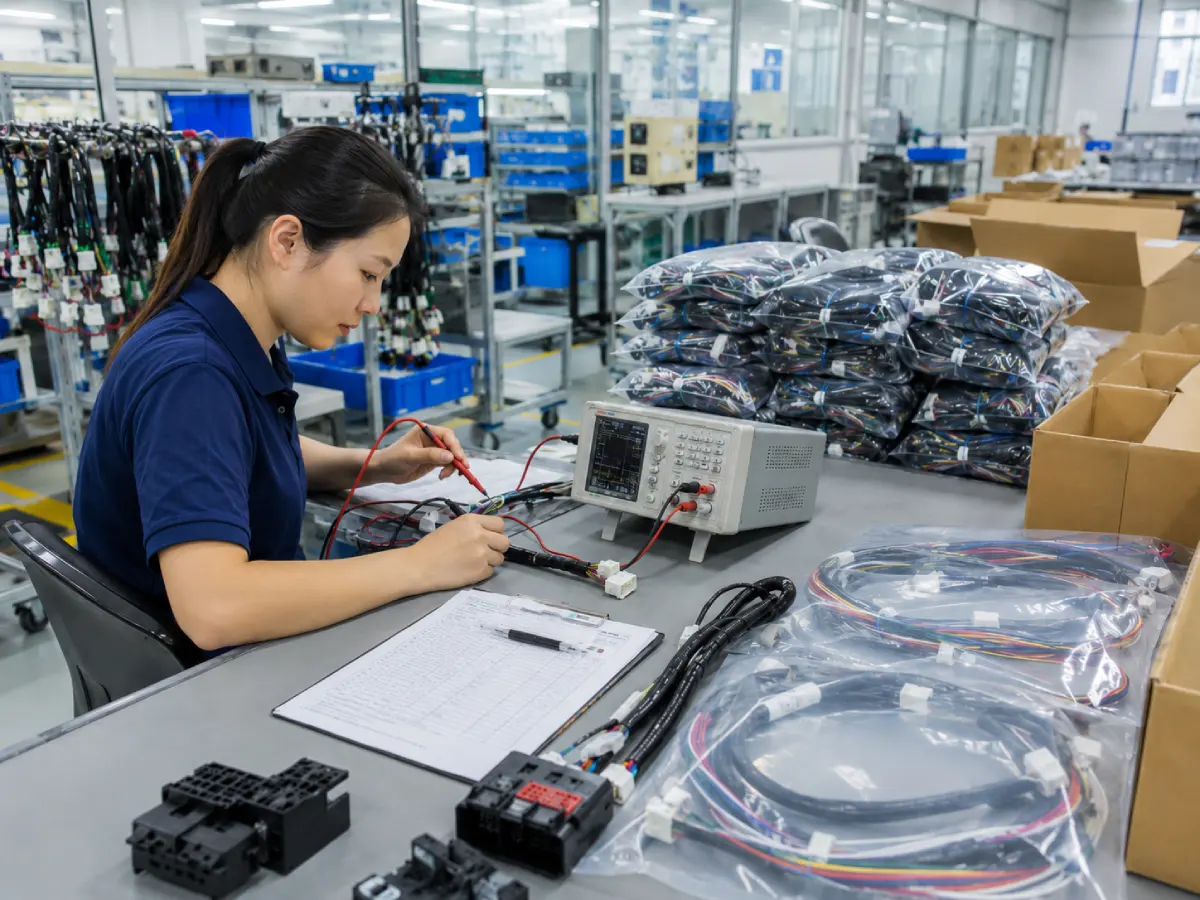
Packaging Details to Send
- Individual packing or bulk packing.
- Quantity per bag, inner box, and master carton.
- Connector protection, dust cap, foam separator, or anti-static bag.
- Controlled coiling diameter for long harnesses.
- Moisture protection is required.
- Carton label, barcode, batch number, and shipping mark.
- Pallet size, export carton strength, and container loading requirement.
- Preferred shipping method and Incoterms.
For wholesale and bulk wire harness orders, packaging consistency is part of operational efficiency. Poor packaging can damage connectors, bend branches, rub labels, mix part numbers, and create extra sorting work at your warehouse. Ask for packing photos before shipment, especially for first orders.
Send Quantity, Forecast, MOQ, and Target Lead Time
Quantity affects material sourcing, labor planning, fixture design, testing setup, packaging method, and unit price. A factory cannot quote accurately if the order quantity is unknown. The unit price for 50 samples, 1,000 pieces, and 50,000 pieces may be very different.
Commercial Details to Include in the RFQ
- Sample quantity.
- First production order quantity.
- Estimated annual demand.
- Expected repeat order frequency.
- Target delivery date.
- Required MOQ flexibility.
- Forecast or blanket order plan.
- Target price range if available.
- Preferred payment terms and Incoterms.
For long-term OEM programs, share forecast information as early as possible. This helps the wire harness supplier plan connector procurement, terminal stock, tooling, operators, and production capacity. For unstable demand, ask whether the supplier can support small batches, safety stock, or flexible delivery schedules.
Compliance Documents to Mention in Your RFQ
Compliance requirements are increasingly important in electrical, electronic, automotive, industrial, and export-oriented products. A wire harness RFQ should clearly state whether you require RoHS, REACH, UL-recognized wire, ISO 9001 quality records, IPC/WHMA-A-620 workmanship expectations, IATF 16949-related documents, or customer-specific certifications.
Global regulatory direction continues to push manufacturers toward safer materials, better chemical control, traceability, and documented quality systems. For wire harness buyers, this means compliance should be discussed at the RFQ stage, not after the sample is approved. If a supplier quotes non-compliant material first and you request compliant material later, the price and lead time may change.
| Requirement | When to Include It | What to Ask For |
|---|---|---|
| RoHS | Electrical and electronic products for regulated markets. | Declaration, material statement, or test report where required. |
| REACH / SVHC | Products containing plastics, sleeves, adhesives, coatings, labels, or exported articles. | Supplier declaration and substance information if required. |
| UL wire | Appliance wiring, electronics, and North American product programs. | UL style, datasheet, and component evidence. |
| IPC/WHMA-A-620 | Cable and harness workmanship acceptance control. | Inspection criteria and workmanship agreement. |
| IATF-related documents | Automotive, EV, vehicle accessory, and mobility supply chains. | PPAP support, control plan, FMEA, traceability, and customer-specific records. |
How to Write a Better Wire Harness RFQ Email
A good RFQ email is clear, structured, and easy to respond to. It should not bury important details in ten separate messages. It should summarize the project, attach technical files, define the quotation scope, and ask the supplier to confirm missing items.
Recommended RFQ Email Structure
- Project introduction: Briefly explain the product application and target market.
- Attached files: List drawings, BOM, sample photos, pinout table, and packaging requirements.
- Quotation request: Ask for unit price, sample cost, tooling cost, MOQ, lead time, and payment terms.
- Technical confirmation: Ask the supplier to identify missing details or manufacturability risks.
- Compliance requirement: State RoHS, REACH, UL, IPC/WHMA-A-620, ISO, or automotive requirements if applicable.
- Volume plan: Share sample quantity, first order quantity, and annual forecast.
- Next step: Ask for a quotation, DFM feedback, and a sample timeline.
Sample RFQ Message for a Custom Wire Harness
Dear Supplier,
We are requesting a quotation for a custom wire harness used in an OEM equipment project. Please review the attached drawing, BOM, pinout table, and sample photos. The harness requires the specified wire gauge, connector models, protective sleeve, labels, and 100% continuity testing. Please quote the sample cost, tooling or fixture cost if needed, MOQ, unit price at 500 / 2,000 / 10,000 pieces, mass production lead time, and packaging method. Please also confirm whether all listed components are available and advise any manufacturability concerns before quotation.
Common Mistakes That Make Wire Harness Quotations Inaccurate
Mistake 1: Asking for a Quote Without a Drawing or Sample
A photo-only inquiry can be useful for early discussion, but it is not enough for accurate pricing. Without dimensions, pinout, material requirements, and testing scope, the quotation is only an estimate.
Mistake 2: Comparing Quotes Based on Different Materials
One supplier may quote branded connectors, while another may quote generic alternatives. One may include UL wire, while another may use standard wire. Always compare the quotation scope before comparing the price.
Mistake 3: Forgetting Test and Inspection Requirements
Testing requires equipment, time, fixtures, and records. If you do not include testing requirements in the RFQ, the quoted price may not include the inspection level you actually need.
Mistake 4: Leaving Packaging Undefined
Packaging affects cost and shipment safety. Bulk packing may be cheaper, but it can create connector damage, label abrasion, mixed parts, or installation delays if your warehouse needs individual identification.
Mistake 5: Hiding the Real Order Quantity
Some buyers ask for a low sample quantity first and reveal the bulk order later. That may seem cautious, but suppliers need volume information to plan materials, tooling, price breaks, and production capacity accurately.
Recommended Wire Harness RFQ Decision Logic
Not every project needs the same RFQ depth. A simple low-voltage internal harness may need fewer documents than an automotive, medical, battery, industrial, or high-voltage harness. The key is to match the RFQ detail with product risk.
| Project Situation | RFQ Strategy | Supplier Type to Prefer |
|---|---|---|
| Early prototype | Send sample photos, a rough drawing, application details, and ask for engineering feedback. | Flexible custom harness assembly supplier with DFM support. |
| Confirmed OEM design | Send full drawing, BOM, test standard, packaging, and annual forecast. | Process-controlled wire harness manufacturer with production capacity. |
| Automotive or EV project | Include PPAP-related needs, traceability, connector approval, and strict testing requirements. | Automotive-aware supplier with quality documentation capability. |
| Bulk export order | Include compliance documents, carton labeling, packing method, lead time, and shipment terms. | Export-experienced wire harness factory China or global project supplier. |
Final Recommendation: Send Enough Detail to Remove Guesswork
A strong wire harness RFQ does not need to be complicated, but it must be complete. Send drawings, BOM, wire specifications, connector details, pinout, application environment, testing requirements, labeling rules, packaging instructions, compliance needs, quantity, and lead time expectations. These details help the factory quote accurately, reduce back-and-forth, and identify risks before sampling or bulk production.
If your project is simple, a clear drawing and basic BOM may be enough. If your project is custom, export-oriented, automotive-related, safety-sensitive, or planned for repeat OEM production, a full RFQ package is worth the effort. The few extra minutes you spend preparing a complete inquiry can save days of clarification, weeks of sample revision, and a frightening number of emails beginning with “Sorry, please confirm again.”
Wire Harness RFQ Summary: What Buyers Should Confirm Before Requesting a Quote
A complete wire harness RFQ helps a factory understand your technical requirements before preparing a quotation. Instead of asking the supplier to guess wire gauge, connector model, pinout, testing scope, packaging, or compliance needs, a clear RFQ package allows the factory to quote the correct product, reduce communication back-and-forth, and identify production risks earlier.
Why does RFQ completeness affect quotation accuracy?
A wire harness quotation is influenced by material selection, connector brand, terminal type, protection method, inspection standard, packaging format, order quantity, and documentation requirements. If these details are missing, different factories may quote different assumptions. That makes price comparison unreliable, even when the harness looks similar on the surface.
What should a buyer send to the factory?
For most OEM or custom harness projects, the RFQ should include drawings, BOM, wire specifications, connector part numbers, pinout, application environment, test requirements, label rules, packaging instructions, compliance needs, and estimated order volume. These details help the factory calculate material cost, labor difficulty, testing time, production lead time, and bulk order feasibility.
RFQ decision logic
| Project Situation | Recommended RFQ Details |
|---|---|
| Early prototype | Send sample photos, rough dimensions, application details, and expected function. |
| Pre-production sample | Send drawings, BOM, connector list, wire specs, pinout, and test requirements. |
| Bulk OEM order | Send approved revision, annual forecast, QC records, packaging rules, and compliance documents. |
Key considerations for OEM buyers
A lower custom harness quote is not always a better quote. If one supplier includes branded connectors, 100% continuity testing, individual packaging, and RoHS documentation while another supplier excludes them, the two quotations are not equal. Always compare the quotation scope before comparing the unit price.
Final takeaway
The best wire harness RFQ removes guesswork. It helps the factory quote accurately, prepare samples faster, control materials better, and reduce production risk. For custom, export-oriented, or bulk OEM wire harness projects, a complete RFQ package is one of the simplest ways to improve supplier communication and avoid hidden costs.
FAQ About Wire Harness RFQ and Quotation
1. What should I include in a wire harness RFQ?
A wire harness RFQ should include drawings, BOM, wire gauge, harness length, connector brand and part number, pinout, insulation material, protection method, label requirements, testing standard, packaging method, order quantity, target lead time, and compliance requirements. The more complete your RFQ package is, the more accurate and comparable the factory quotation will be.
2. Can I request a wire harness quotation without a drawing?
Yes, you can request a wire harness quotation without a formal drawing if you provide a physical sample, clear photos, rough dimensions, application details, connector information, and expected quantity. However, before mass production, the sample should be converted into a controlled drawing or specification to avoid length, pinout, material, and assembly errors.
3. Why do different factories quote different prices for the same wire harness?
Different factories may quote different prices because they use different assumptions for wire material, connector brand, terminal type, testing scope, packaging method, labor process, MOQ, and compliance documents. To compare prices fairly, make sure every supplier quotes the same drawing, BOM, test requirement, packaging standard, and order quantity.
4. Should I send connector part numbers in a cable assembly RFQ?
Yes, connector part numbers should be sent whenever possible. Connector brand, series, part number, terminal model, mating connector, seal, lock, and approved alternatives help the supplier quote accurately and prevent mismatch. If alternatives are allowed, they should be approved through samples and testing before bulk production.
5. What testing requirements should be listed in a wire harness inquiry?
A wire harness inquiry should list required tests such as continuity testing, pinout verification, short circuit testing, crimp pull-force testing, crimp height inspection, insulation resistance, Hi-Pot testing, waterproof testing, or visual inspection. The exact test scope depends on the application, risk level, destination market, and OEM quality requirements.
6. How does order quantity affect a custom harness quote?
Order quantity affects material purchasing, connector MOQ, tooling or fixture cost, labor planning, packaging method, testing setup, and unit price. A sample order, pilot order, and bulk order may have different prices. Sharing first order quantity and annual forecast helps the supplier provide a more realistic custom harness quote.
7. What compliance documents should I mention in an OEM wire harness RFQ?
An OEM wire harness RFQ may need to mention RoHS, REACH, UL-recognized wire, IPC/WHMA-A-620 workmanship expectations, ISO 9001 quality records, IATF 16949-related documents, PPAP support, IMDS data, or customer-specific requirements. The required documents depend on the final product, industry, and destination market.
8. How can I reduce back-and-forth when requesting a wire harness quote?
To reduce back-and-forth, send a structured RFQ package with drawings, BOM, photos, pinout, material requirements, connector details, testing scope, labeling rules, packaging instructions, compliance needs, quantity, and lead time. You should also ask the supplier to confirm missing details and manufacturability risks before submitting the final quotation.
Reference
- European Commission. “Restriction of Hazardous Substances in Electrical and Electronic Equipment.” European Commission, Environment.
- European Chemicals Agency. “European Chemicals Agency Overview and REACH Chemical Safety Role.” European Union.
- IPC and WHMA. “IPC/WHMA-A-620F: Requirements and Acceptance for Cable and Wire Harness Assemblies.” Global Electronics Association.
- UL Standards & Engagement. “ANSI/UL 758: Appliance Wiring Material.” UL Standards.
- International Organization for Standardization. “ISO 9001:2015 Quality Management Systems.” ISO.
- Automotive Industry Action Group. “IATF 16949:2016 Automotive Quality Management System.” AIAG.
- The Insight Partners. “Wire Harness Market Research Report, Size and Forecast by 2030.” The Insight Partners.
- Fortune Business Insights. “Automotive Wiring Harness Market Size, Share and Forecast.” Fortune Business Insights.
- International Automotive Task Force. “Customer Specific Requirements for IATF 16949.” IATF Global Oversight.
- UL Solutions. “Appliance Wiring Material Testing and Certification.” UL Solutions.